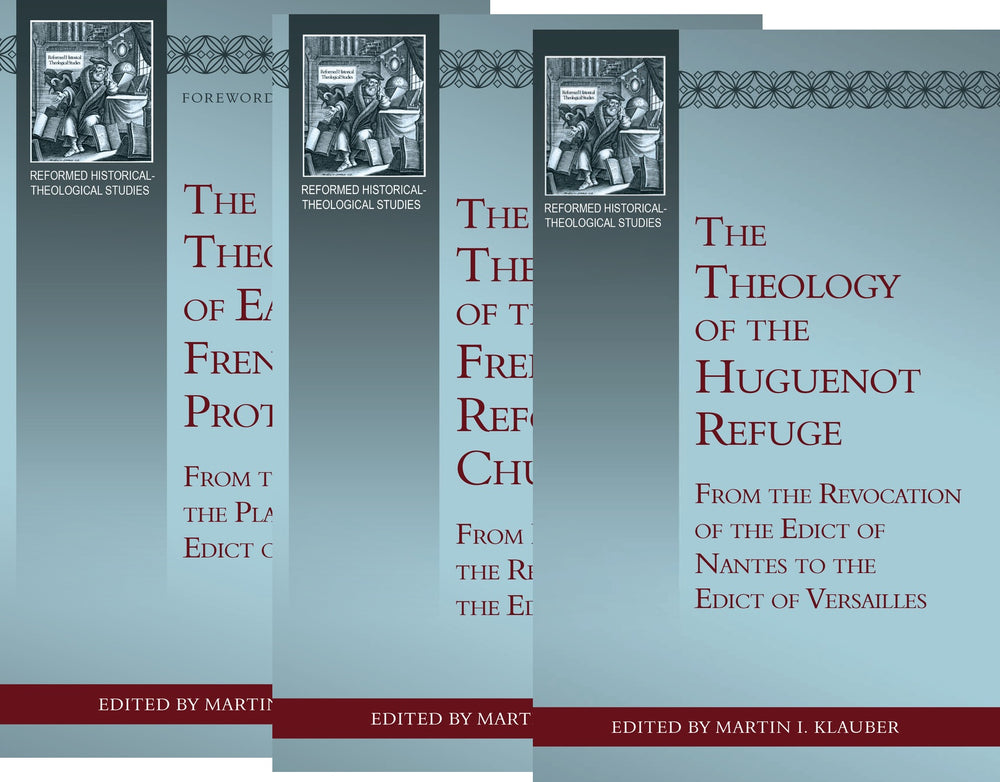


Klauber French Theology Book Pack
Original price was: $135.97.$40.99Current price is: $40.99.
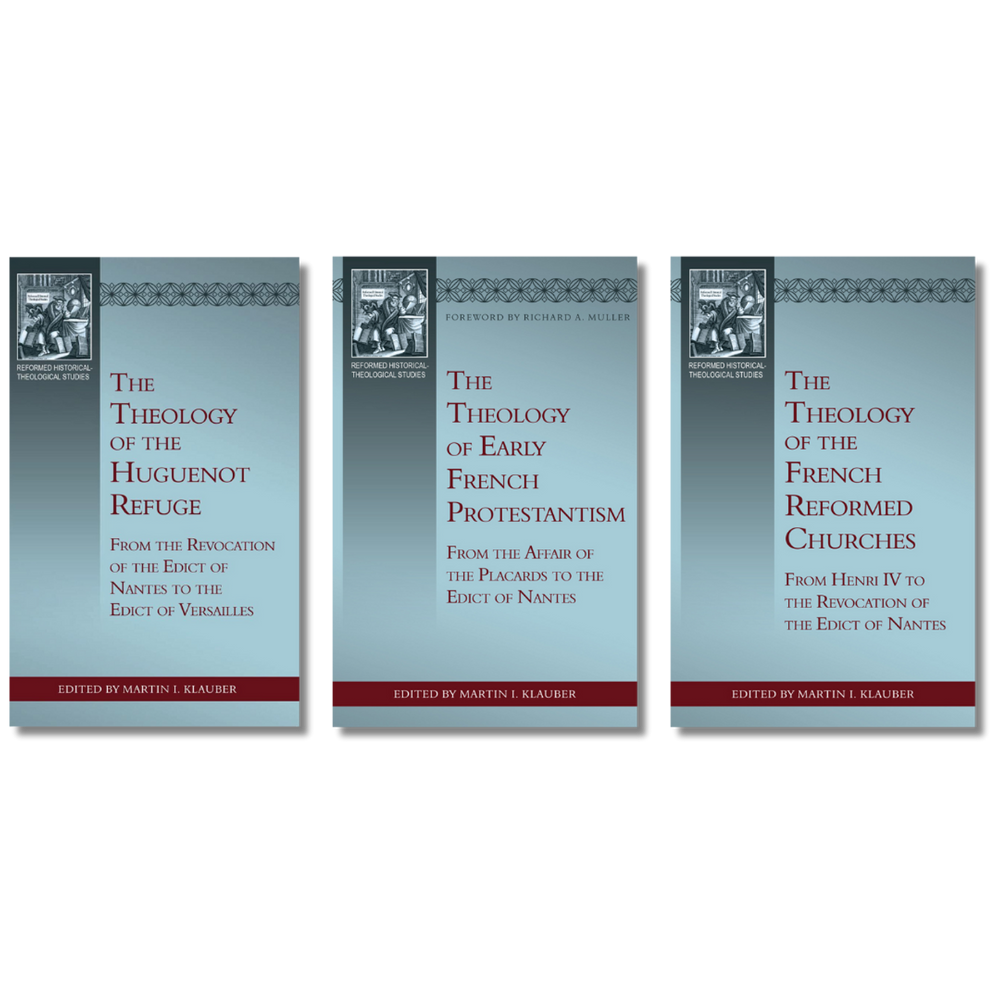
This Book Pack contains:
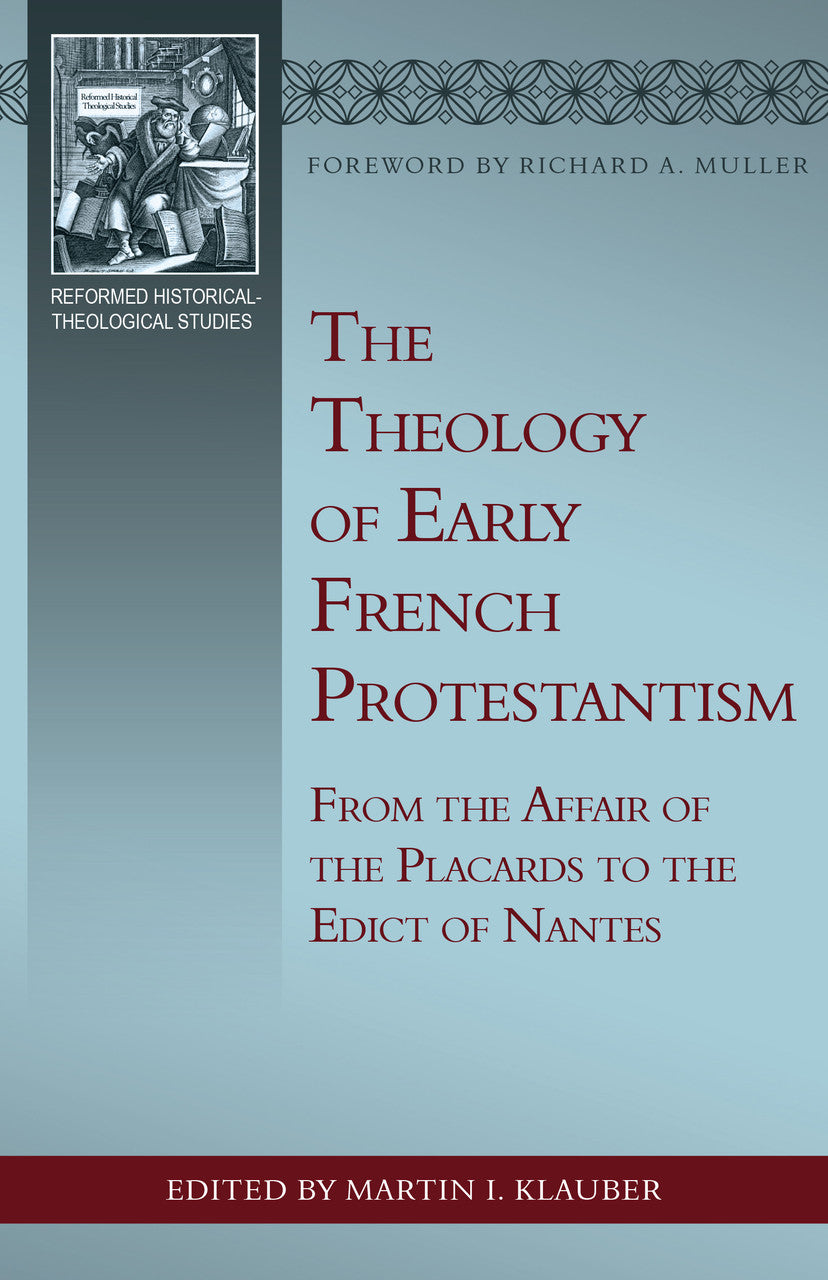
The Theology of Early French Protestantism: From the Affair of the Placards to the Edict of Nantes
Martin I. Klauber and his troupe of capable historians survey the tumultuous era of the first three generations of French Protestantism. The first part of the book provides historical context, including chapters on the national synods of the French Reformed churches, the wars of religion, the St. Bartholomew’s Day Massacre, the conversion of Henry IV, and the political views of the French Monarchomachs. The second part of the book takes a closer look at the lives and contributions of leading French reformers like Guillaume Farel, Nicolas des Gallers, John Calvin, Sebastian Castellio, Peter Ramus, Antoine de Chandieu, Simon Goulart, Theodore Beza, Pierre Viret, and Philippe du Plessis-Mornay. This collection provides a quality introduction to French Reformed theology in the sixteenth century.
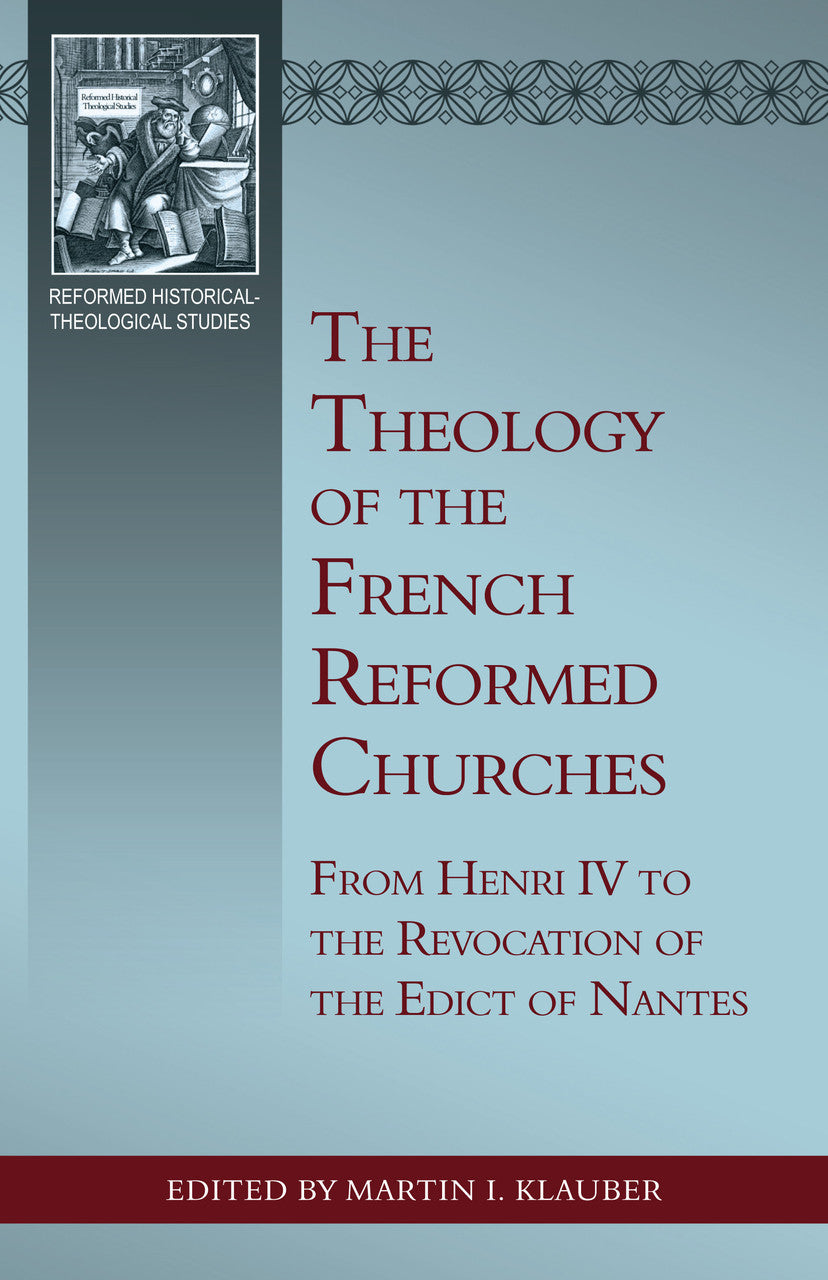
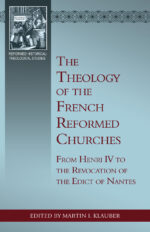
The Theology of the French Reformed Churches: From Henry IV to the Revocation of the Edict of Nantes
The Theology of the French Reformed Churches introduces us to the Huguenots of the seventeenth century. The period was an unusual one in which France boasted two state religions, Roman Catholic and Protestant, due to the protections afforded the latter by the Edict of Nantes in 1598.
In this book, Martin I. Klauber and his team of scholars survey the development of and diffi culties facing the early French Reformed tradition as well as the ecclesiastical, theological, and political challenges it faced during the seventeenth century. They also investigate the important contributions made by some of its most significant theologians: Moïse Amyraut, Pierre du Moulin, Jean Daillé, Andreas Rivetus, Charles Drelincourt, Claude Pajon, Jean Claude, and Pierre Jurieu.
The theologians of the seventeenth-century French Reformed churches displayed a theological richness rarely remembered even among Reformed believers in the centuries following their labor, and this volume resurrects some of their vitality for a new audience.
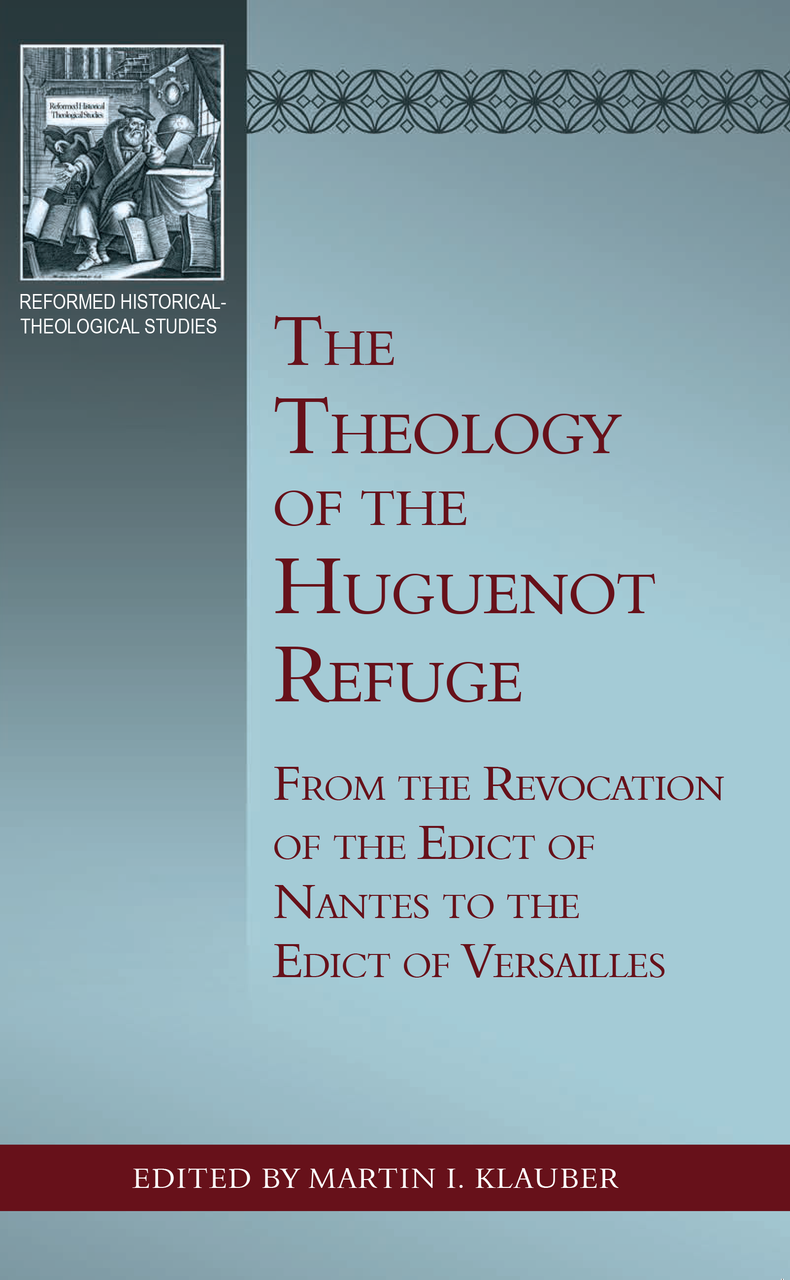
The Theology of the Huguenot Refuge: From the Revocation of the Edict of Nantes to the Edict of Versailles
French Protestants following the Revocation of the Edict of Nantes (1685) provided a rich theological tradition that has received relatively little scholarly attention.
In this book, Martin I. Klauber and his careful band of historians survey events leading up to the Revocation and various responses to it in the decades leading up to the Edict of Toleration (1787). They also investigate important theological contributions by leading French Reformed exiles like Pierre Jurieu, David Martin, Claude Brousson, Jacques Basnage, Jacques Abbadie, Daniel de Superville, and Jacques Saurin.
Whereas previous generations debated the definition of the true church, the doctrine of universal grace, and the nature of the Eucharist, post-Revocation theologians focused discussions on eschatological concerns, the problem of Nicodemism, and more political matters, such as the degree of allegiance owed to a king who had legally outlawed the Reformed faith in France.