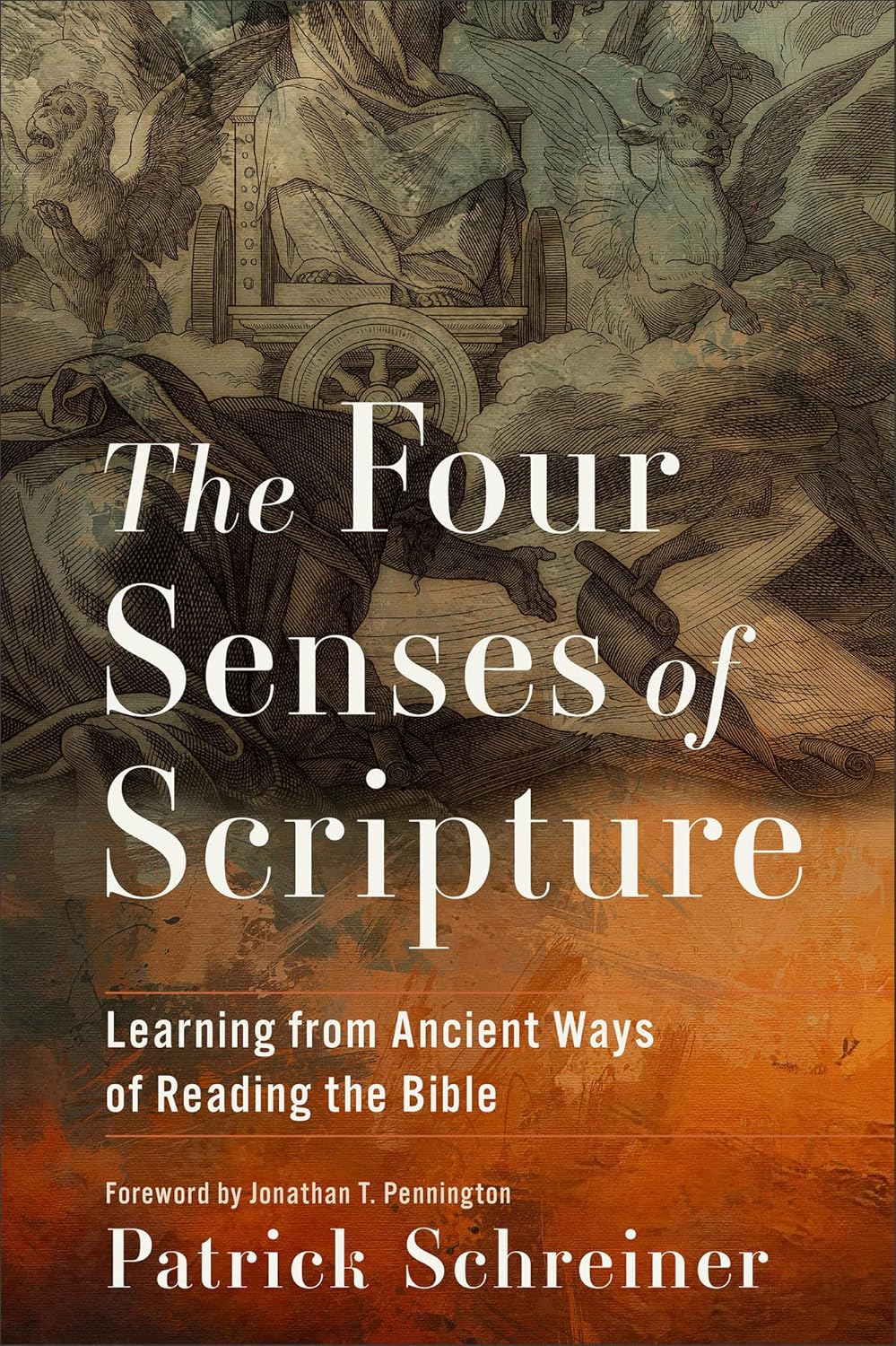
Four Senses of Scripture, The: Learning from Ancient Ways of Reading the Bible
Original price was: $39.99.$11.99Current price is: $11.99.
FORTHCOMING TITLE, ETA DECEMBER 2026
In the modern era, biblical hermeneutics has been dominated by the grammatical-historical method. This represents a departure from the interpretive approach commonly used during the prior 1,700 years of the church, the four senses approach (or quadriga). Those four senses are literal (grammatical-historical), allegory (Christological), tropology (moral), and anagogy (eschatological).
Patrick Schreiner doesn’t believe modern hermeneutics is wrong but believes that it is incomplete in ignoring these other aspects. Here he seeks to recover this ancient method by explaining it, defending it, and offering a coherent method for using it. With scholars, students, and pastors in view, he argues that this approach, with the senses in conversation with each other, better respects the nature, goal, and ecclesial setting of reading, interpreting, and applying the Bible.
Schreiner begins by giving a brief overview of the four senses and why early Christians used this method. He then examines each sense in detail, exploring the what, why, and how, along with providing examples. Finally, he addresses anticipated exegetical, historical, and allegorical objections to his proposal. The book includes a foreword by Jonathan T. Pennington.
288 pages.