Will in Its Theological Relations, The
Original price was: $58.99.$17.99Current price is: $17.99.
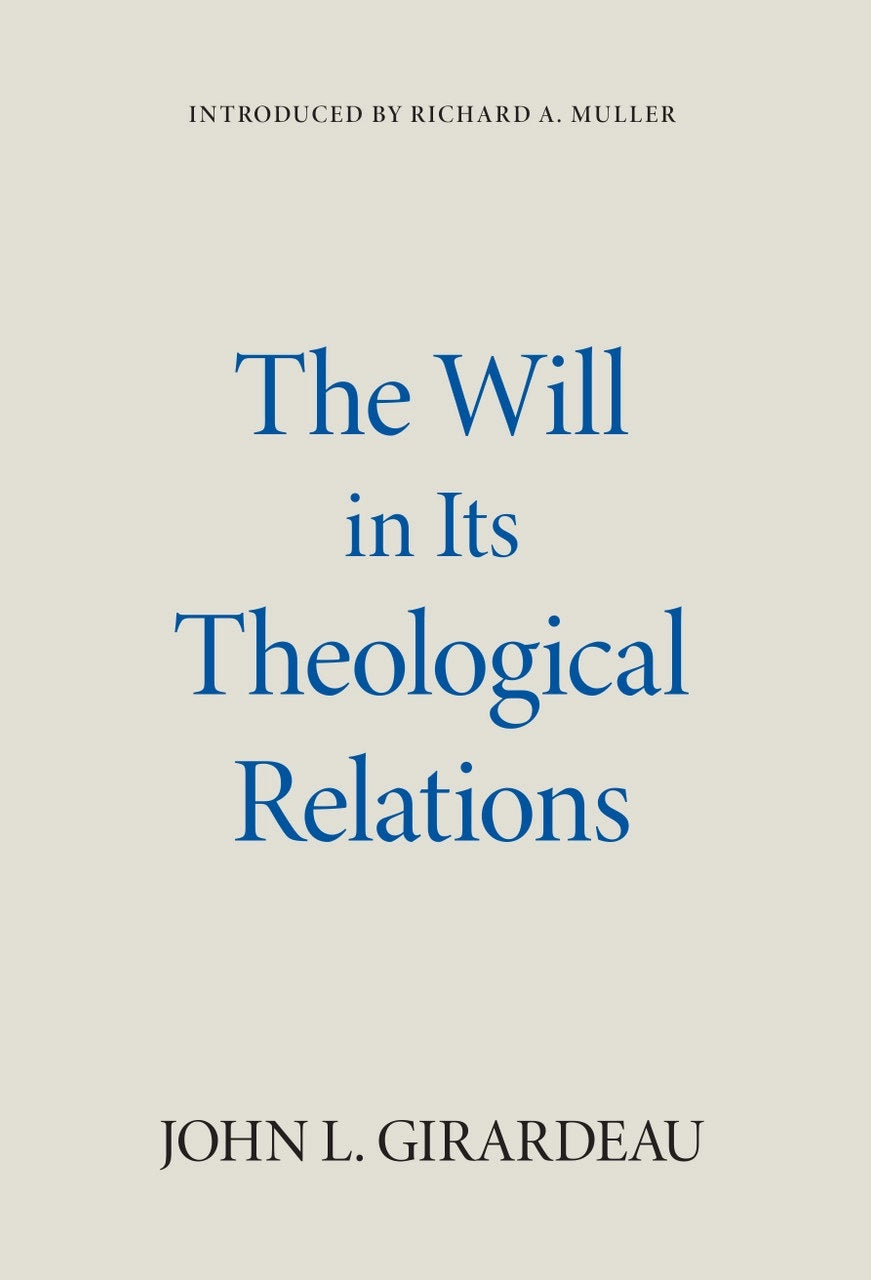
The Will in Its Theological Relations addresses human freedom and God’s decrees within a nineteenth-century debate over full-blown determinism. More specifically, John L. Girardeau challenges Jonathan Edwards’s doctrine of the will and its tendency to identify certain foreknowledge with causal necessity. While appreciative of Edwards as a brilliant thinker and spiritual giant, Girardeau respectfully exposes Edwards’s theory of necessity as an injurious incursion into Reformed theology. Here is one of the clearest and fullest cases against Edwardsian determinism. It is also an articulate restatement of the orthodox Reformed perspective on human bondage to sin against Arminian theology.
554 pages.
Contents
Part 1-The Will in Man’s Innocent and Fallen, Unregenerate Estates
Part 2-The Will in Man’s Regenerate and Glorified Estates
“John Girardeau’s The Will in Its Theological Relations is a unique opportunity to listen to an ongoing conversation about one of theology’s more challenging questions-the relationship between divine sovereignty and human responsibility. The republication of Girardeau’s insightful work affords students of Scripture the privilege of learning more about how God foreordains whatsoever comes to pass and yet does not offer violence to the will of creatures. An additional benefit is Richard Muller’s outstanding introduction that expertly situates Girardeau’s work within its immediate nineteenth-century setting and wider context within the Reformed tradition. With Muller as an able guide, readers can greatly profit from this work, one worthy of careful study and meditation.”
-J. V. Fesko, Harriett Barbour Professor of Systematic and Historical Theology, Reformed Theological Seminary, Jackson, Mississippi
“The Will in Its Theological Relations argues the case both for a Reformed doctrine of the decrees and for a Reformed doctrine of human freedom in the context of the nineteenth-century Presbyterian debate over a full-blown determinism, specifically over the suitability of Jonathan Edwards’s doctrine of the will and its attendant identification of certain foreknowledge with causal necessity, as confirmed and spelled out in some detail by later Edwardsians, notably, Jonathan Edwards Jr. What distinguished Girardeau from earlier American critics of Edwards was his historical sensibilities and his advocacy of what he held to be the orthodox and confessional Reformed position. Girardeau argued a ‘palpable contradiction between Edwards and Calvin as to the status quaestionis concerning the Will.’ His treatise, then, not only addresses what he took to be logical and psychological flaws in Edwards’s work, it also argues its case on the basis of a careful and cogent examination of sixteenth- and seventeenth-century Reformed theology, demonstrating the orthodox Reformed roots of his own approach over against that of Edwards. Arguably, Girardeau’s view is a far better exposition of the orthodox doctrine than Edwards’s-given Girardeau’s rootedness in the texts of Reformed orthodoxy and Edwards’s failure to examine any of those texts in his Freedom of Will, including Mastricht’s Theoretico-practica theologia, which he claimed to value so highly. However that question is decided, it is clear that Girardeau presents the clearest and fullest Reformed case against an Edwardsian determinism of anyone in the nineteenth century, even as he steers clear of Arminianism.”
-Richard A. Muller, from the foreword